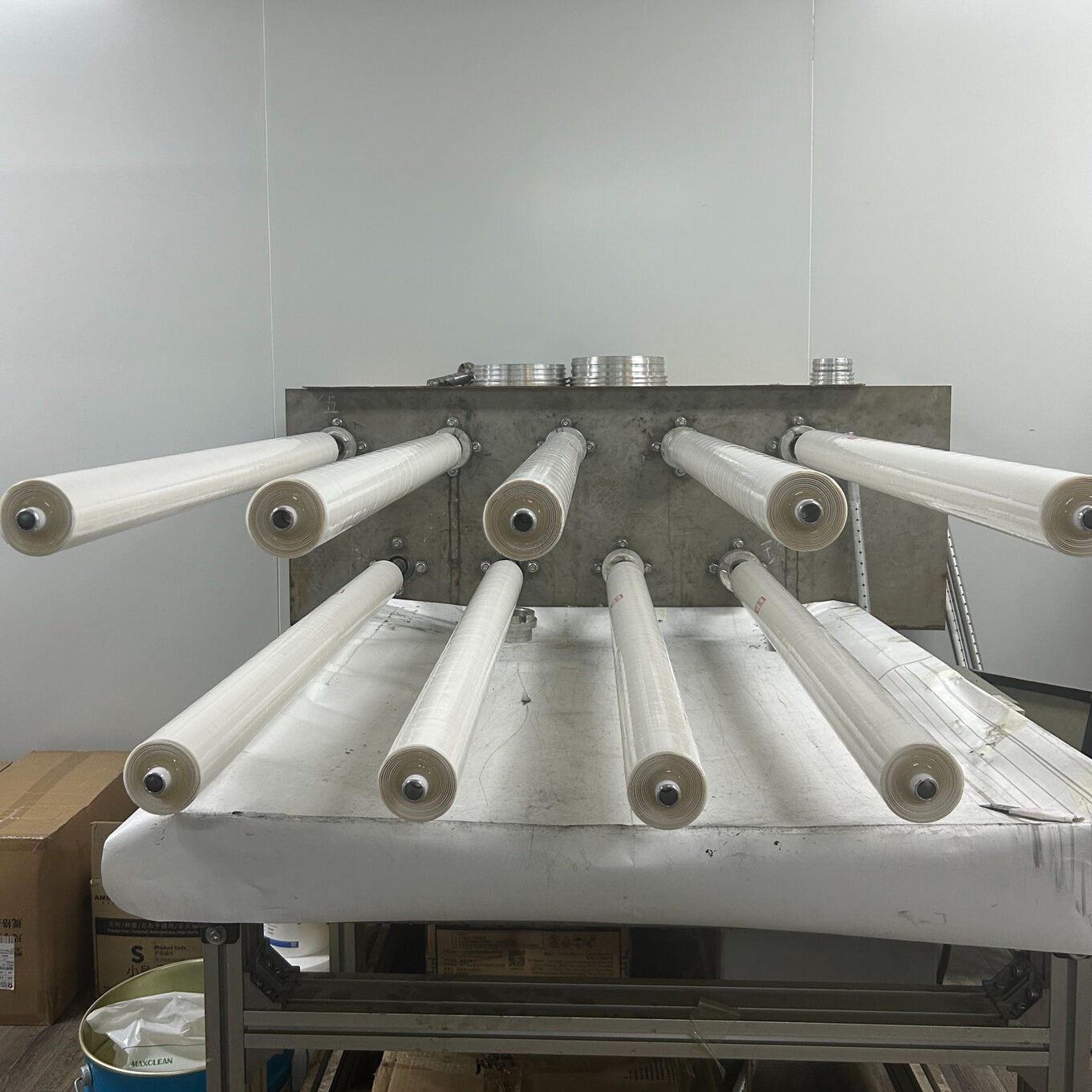
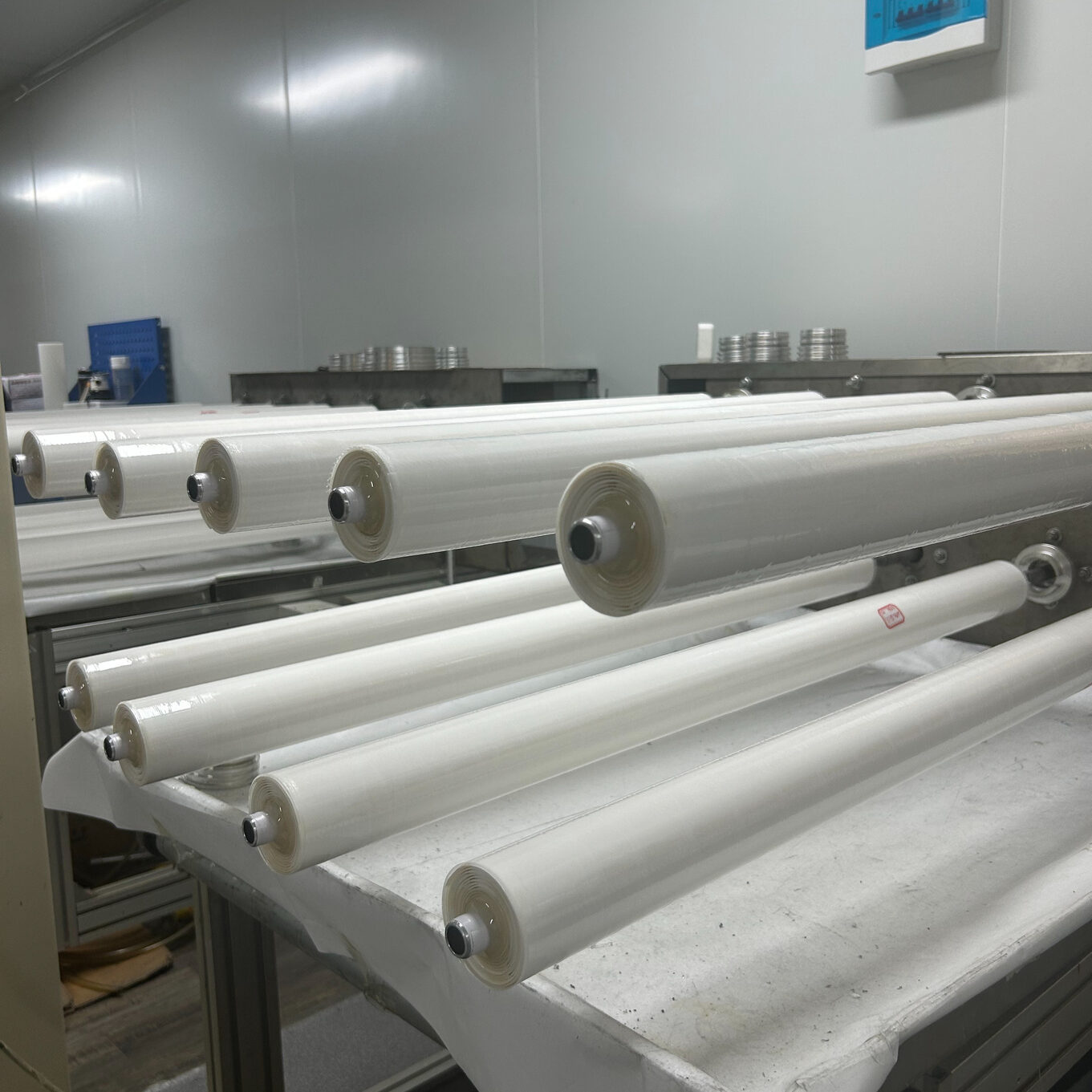
VOC Separation Membrane
Product Overview
VOC separation membranes are the core components for the recovery and treatment of volatile organic compounds. By employing gas membrane separation technology, they selectively separate organic compounds from air in industrial exhaust gases, enabling the efficient recovery of organic gases and compliance with emission standards.
The product utilizes a polymeric composite membrane material with selective permeability. Under the driving force of a pressure differential, hydrocarbon vapor molecules preferentially pass through the membrane layer, while air molecules are retained, thereby achieving effective separation of hydrocarbon vapors from air.
Product structure
The separation membrane employs a composite structural design:
Separation layer: A dense polymeric membrane material responsible for selective gas separation.
Support layer: Porous reinforcing material that provides mechanical strength.
Protective layer: Surface protective layer that extends the service life of the membrane assembly.
Product features
High separation efficiency: Exhibits excellent selective permeability to organic gases, enabling efficient separation of hydrocarbon vapors from air.
Good permeation performance: The membrane material exhibits high permeability, low gas resistance, and high treatment efficiency.
Excellent resistance to swelling: Utilizes a specialized polymer material that is resistant to swelling by organic solvents, ensuring stable performance over long-term operation.
Long service life: The membrane module exhibits excellent durability and can operate stably for extended periods under normal operating conditions.
Low operating costs: No high-temperature regeneration is required; operations are conducted at ambient temperature, resulting in energy consumption that is significantly lower than that of conventional recovery processes.
Safe and reliable: No open flames are used, making it suitable for hazardous (explosion-proof) areas; the system operates safely.
Working principle
VOC-containing waste gas enters the membrane separation unit. Driven by the pressure difference across the membrane, organic gas molecules (such as hydrocarbons, ketones, and alcohols) preferentially permeate through the polymer membrane and are concentrated for recovery, while air components such as nitrogen and oxygen are retained and discharged as purified gas.
The permeated, enriched hydrocarbons can be returned to the front-end system for further liquefaction and recovery, or directly recycled into the production process, thereby achieving the dual objectives of resource reuse and compliance with environmental protection standards.
Application scenarios
Gas station three-stage vapor recovery system
Treatment of Organic Waste Gases in the Chemical Industry
Vapor recovery during the storage and transportation of petroleum products
VOCs treatment in industries such as pharmaceuticals, coating, and printing.
LuoyangWohong PetrochemicalEquipment Co., Ltd.
Website: www.wohongshihua.com
Tel: +86 13526990215
Mr. Li 13526990215

Hotline