How to deal with condensation, frosting, and blockage in the solvent recovery system? Direct answer: First check if there is water in the intake air - when drying and pre-treatment fail, water enters the refrigeration unit and forms thicker frost on the low-temperature heat exchange surface, narrowing the air duct and preventing the cooling capacity from increasing, creating a vicious cycle. Disposal sequence: Stop the machine for defrosting, check the pre drying and defogging, clean the heat exchange surface, review the temperature setting, and then resume operation for observation. The condensation system running with water, defrosting is only a temporary solution. If the air source is not dry, the frost will come back again and again.
One is technological: the moisture content in the intake is already high, and during low-temperature condensation, moisture precipitates on the heat exchange surface. This type of working condition design reserves defrosting cycles and condensate discharge interfaces, which can be executed according to regulations. Another type is faulty: the front dryer fails, the defogger is damaged, the insulation is damaged and moisture enters, exceeding the design expectations and causing frost to form at a much faster rate than normal. Distinguish between the two based on the frequency of defrosting - under normal operating conditions, defrosting occurs periodically. If the frequency suddenly increases, it is a fault signal. Check the front-end facilities.
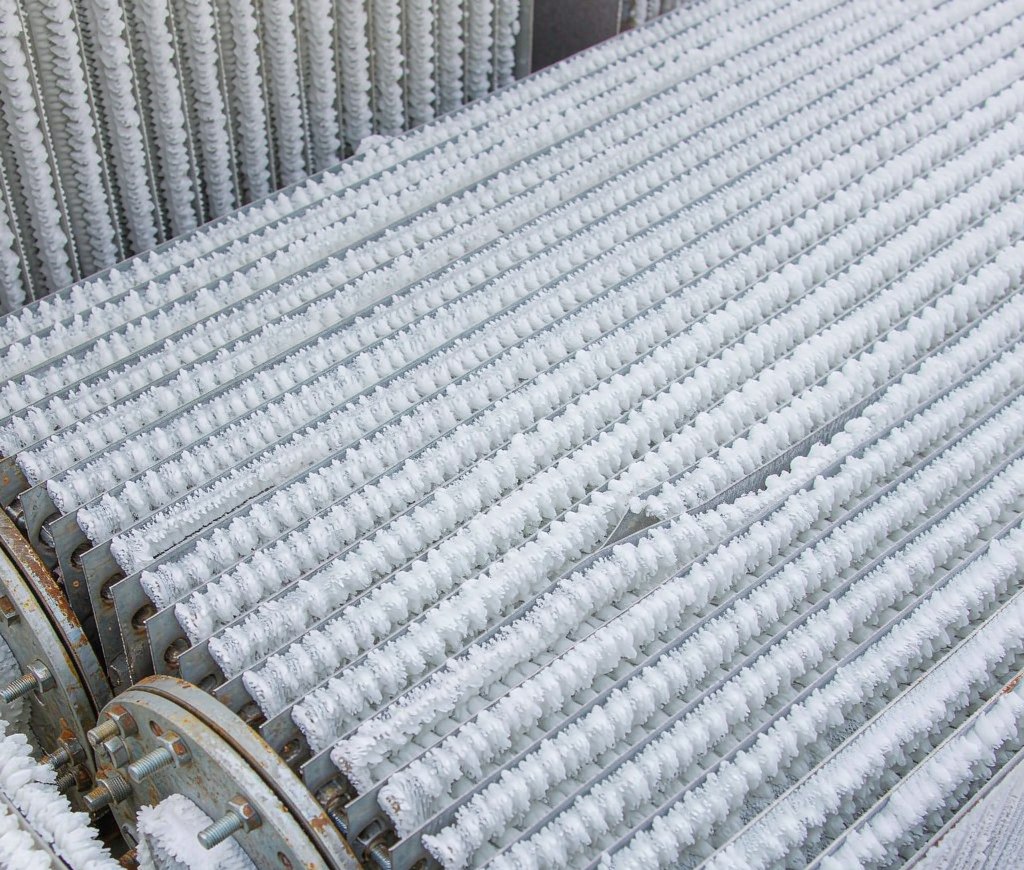
After frosting affects heat exchange, stop the machine first and defrost according to the regulations - slowly defrost with warm water or hot nitrogen gas. It is strictly forbidden to use tools to scrape the fins. Aluminum fins will bend with one shovel, and the wind resistance will increase if bent. Drain the defrosting water from the condensate outlet and check if there is any liquid accumulation or ice blockage in the low point pipeline. After cleaning, check the cleanliness of the heat exchange surface. Use specialized cleaning agents to treat the scale layer mixed with oil and dust, and do not use corrosive solvents. At the same time, check whether the insulation layer is damaged or damp. Moisture insulation not only causes frost but also wastes cooling capacity.
The problem with frost often lies outside of the cold. Check four items: whether the refrigerant charge is insufficient, whether the compressor suction and discharge pressure is normal, whether the expansion valve opening and subcooling degree, and whether the condenser heat dissipation is poor. Frosting accompanied by insufficient cooling capacity, focus on checking the refrigerant and valve components; If the air volume and pressure difference are abnormal, check the fan and air duct. The temperature setting also needs to be reviewed - blindly chasing low temperatures can lead to increased energy consumption and a sudden increase in frosting speed when approaching the freezing point of water. Set the temperature range according to the process requirements and avoid excessive use.
| Phenomenon | First check | handle |
|---|---|---|
| The frosting speed suddenly increases | Pre drying and defogging | Replace desiccant and repair defogger |
| Thick frost layer but sufficient cooling capacity | Defrosting cycle | Encrypt and defrost according to regulations |
| The frost is not thick and the temperature cannot be lowered | Refrigerant and valve components | Check the filling amount and expansion valve |
| Defrosting water cannot be completely drained | Condensate drainage pipeline | Clear the low point and drain the condensate |
The robustness of the condensing system is partly determined by design margin and partly by the quality of the gas source. Cover the intake humidity pipe, and frost will return from the fault to normal, and the service life of the refrigeration unit will also be extended.
Defrosting is not about waiting for the frost to thicken before melting. The timing of defrosting depends on three signals: the temperature difference on the heat exchange surface gradually increases, the fan current slowly rises, and the outlet temperature cannot reach the set value. If any of these three signals appear, defrosting should be arranged instead of waiting for the air duct to be blocked. Defrosting itself also consumes energy, and frequent defrosting indicates a problem with the gas source or design. Recording defrosting as a curve, a sudden change in frequency is a precursor to a malfunction. Perform a preventive inspection before winter operation: ensure proper insulation, smooth drainage, replace desiccants, and prevent problems before the freezing period.
You can use warm water to slowly defrost, and it is strictly prohibited to use steam or tools to scrape directly. Excessive water temperature can damage the fins and seals.
Long term shutdown requires draining the condensate and purging, as the volume expansion of residual liquid accumulation and freezing will rupture the pipeline.
No. Set according to the process requirements, excessive low temperature not only increases energy consumption but also accelerates frosting, so caution should be taken when operating near freezing point.
This article by LuoyangWohong PetrochemicalEquipment Co., Ltd. arranges that the company provides design, manufacturing and operation and maintenance services for condensation recovery, membrane separation recovery and complete solvent recovery devices for chemical and pharmaceutical enterprises. If you need process evaluation or scheme configuration, please contact and exchange.
Mr. Li 13526990215

Hotline